Motivation behind Ideation
#10More than inspiration, its triangulation
Ok, so we feel the problem… let's do more than just talk about the problems. Let's discuss and act on the solutions.
As I detail in my Missional Entrepreneurship course, this puts us at the ideation stage.
Most people do not fail because they lack inspiration. They fail because they never locate the idea.
Inspiration is like seeing a light in the distance through fog. It feels real, it feels urgent, it feels like God might be in it... but you still do not know where you are standing, what direction you are facing, or how far you have to walk.
That is why this post is not just about getting more inspired. It is about getting more accurate.
Ideation is not daydreaming. Ideation is clarifying inspiration into something you can build, sustain, and use in service. It is problem solving... but it is also bias removal. It is a way of forcing your heart, your head, and your hands to agree on the same reality.
Ideation is the process of clarifying inspiration. It is problem solving.
Motivation Triangulation
Inspiration come from different motivations: passion, demand or empathy.

Ideating on Passion
Rooted in: curiosity, expertise, obsession...
It is my experience that most first time founders ideate out of passion. They start with something they love doing or have deep expertise in and dive in.
Having a deep passion about a problem you want to solve is a mighty motivator. You will stick with the project through hard times and grind it out even before the financial validation comes.
The risk is simple... passion is amazing at persuading you, even when the market is not persuaded.

Ideating on Demand
Rooted in: trend analysis, recurring needs, clear outcomes
The next motivation for ideation is demand. These are often analytical minds, or those who have previously ran a passion project that did not pan out and now enter with a mentality of making it work financially.
They spot a trend in the market and ask, what are people already paying for, and why?
When ideating on demand, the opportunity is that you are aligned to revenue and what the market says the consumer wants.
The risk is also simple... demand can make you build what pays, even if it hollows you out, or trains you to manufacture wants instead of meeting needs.

Ideating on Empathy
Rooted in: other-centeredness
The next motivation is empathy... understanding the needs of your customer, and caring enough to act.
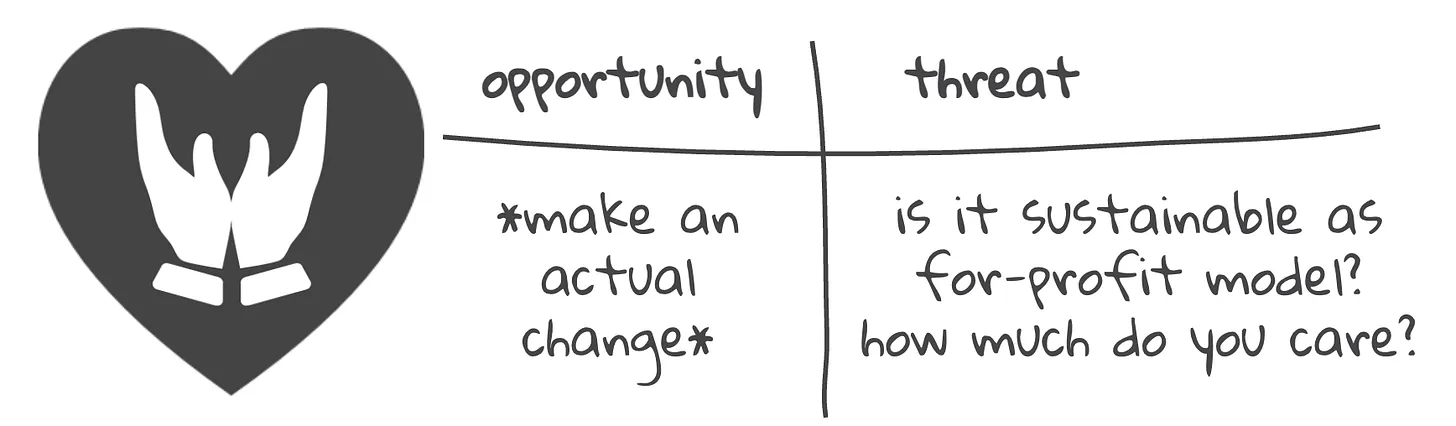
When ideating on empathy, the opportunity is to change the world in a positive way.
The threat is first, is the idea sustainable as a for-profit model? If not, how will you sustain it?
The second threat is personal... are you committed enough to see it through in hard times? How deep do you care about solving this problem for others?
What becomes clear is that there are different motivations.
If you can find the intersection of these three motivators, you will likely find success.
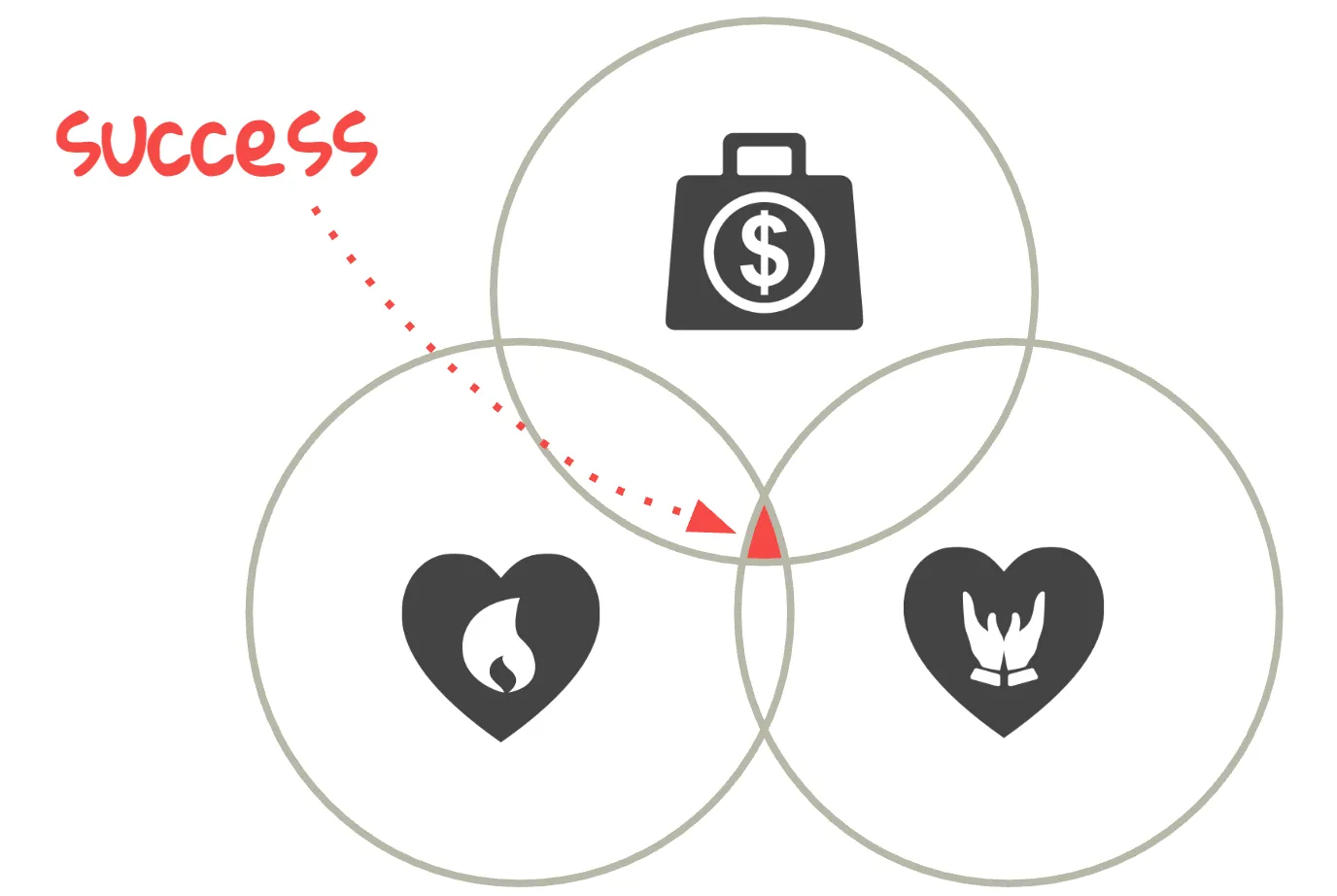
This is why I say that ideation is about triangulation.
Triangulation is what sailors do when they cannot trust a single signal. You take multiple reference points, you confirm your position, you stop pretending you know where you are.
In venture building, the fog is your own mind. Your excitement, your fear, your assumptions, your blind spots. Triangulation forces you to measure reality from more than one angle.
It is a process, or an innovative journey… we often start with excitement around an idea, as this matures we face a reality check if there is enough demand to warrant this idea, and then we look to flesh the idea out by road testing against potential users.
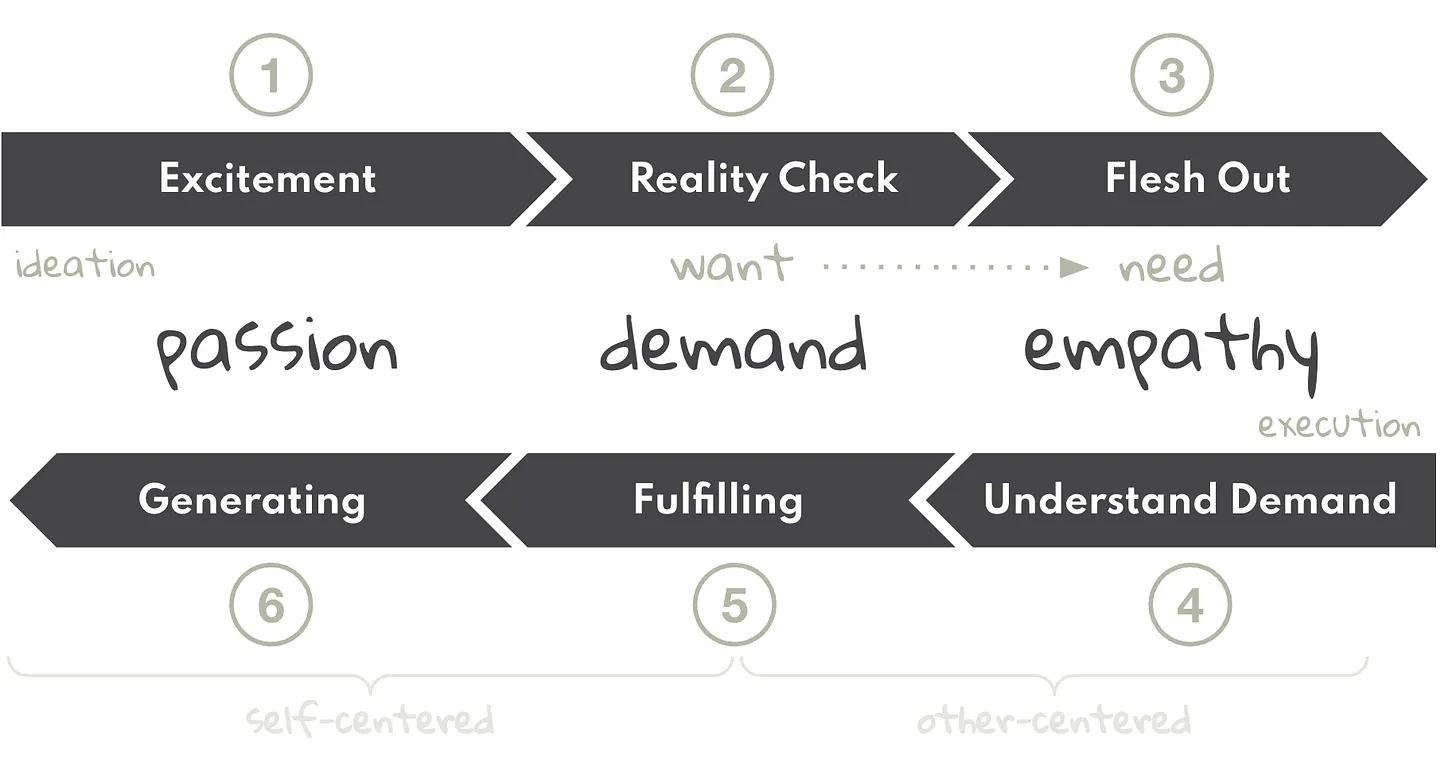
This we start to think of others more… We move from self-centered (not in a purely negative way) to other centered. We question if we are manufacturing a want, or providing for a real need?
Then you can work your way back in execution. Using empathy to build out clear customer personas with this understanding differentiating ourselves on how to fulfill the demand, this includes pipeline processes and operational efficiency and finally generating demand by helping others see what you see… building awareness by letting your passion and authority show explaining the problem and solution as you see it through your lens…
This is a powerful start, but I have found that it goes deeper…
Ideation Personas
What I always teach my startup founders is that they need to know what their thinking style is. Self awareness is so important and useful to us and those we wish to serve.
I define thinking styles in relation to the True Education facets of head, hand, and heart. It is interesting that these already map pretty cleanly to where people naturally ideate from.

Revolutionary (Head)
Default: Passion-first
Typical behavior:
• Sees a new pattern, philosophy, or model.
• Is excited by big-picture change, disruption, new categories.
• Often has deep expertise or at least deep conviction in the topic.
The revolutionaries are not satisfied with small improvements, but instead think bigger and seek to disrupt an entire industry. They often ideate out of passion. They have a high tolerance for risk and have the ability to move between the ether and the earth fluidly. In a group setting they tend to speak their mind, challenge the rules and often authorities. They think outside the box which allows them to be a true catalyst for innovation. This persona is often uncomfortable with routine and is often looking for new problems to solve once processes normalize. They are ideally suited for startups but may get bored once the company matures.
If you identify with this type, you are in the minority. My advice to you is to pray for humility. Find ways to embrace and incorporate ideas of those who will be working in the ecosystems you design, even if you feel they can only see a small part of your plan. Patience is key, remember to be kind (I am still learning this).
Reformational (Hand)
Default: Demand-first
Typical behavior:
• Sees broken processes, waste, inefficiency.
• Is drawn to optimization, cost savings, reliability.
• Tends to spot clear "there is money on the table" opportunities.
The next type of problem solver is often looking to improve a current system or process. They often ideate out of demand. This model is implemented by adaptive thinkers who tend to follow rules. They are often ideating from inside the box. Their attention to detail and methodical approach allows them to identify potential problems. They will be best utilized in later stages of a company and can be relied on for stability.
If this best describes you, consider training yourself to spot inefficiencies and opportunities for automation or micro improvements. Recognize that a blank canvas may be too intimidating, so don't force yourself to come up with a new idea, simply think how you can improve a current one. Be cautious not to allow your need for group consensus to stop progress. Develop curiosity and push yourself to think out of the box more.
Relational (Heart)
Default: Empathy-first
Typical behavior:
• Feels the pain, confusion, or loneliness of a person or community.
• Is naturally drawn to support, experience, and relational safety.
• Often wants to "fix how people feel" more than "ship a product".
This final type is similar to the reformational persona and are adaptive thinkers, however they are less focused on processes and more intune with individuals needs. They ideate out of empathy and sympathy. Their ideas are often around improving interpersonal needs.
If this describes you, understand that not all products are tangible; rather than pushing yourself to invent a product, think about inventing an experience. Place your mindset on ideating around training, workshops, excursions, membership-based groups and other events.
Anxiety-Free Entrepreneurship
Remember, God gave us different strengths and weaknesses so that we work together in harmony:
"In all the Lord's arrangements, there is nothing more beautiful than His plan of giving to men and women a diversity of gifts." Letter 122, 1902
To every man was given his work according to his several ability. Matthew 25:15
Hopefully by knowing your type, ideation will seem less intimidating. Remember, "if you are anxious, you are doing it wrong" :)
This is the type of understanding that needs to be communicated in our community. Not all people will look through the same lens or be motivated in the same proportion.
Why our community needs a Venture Studio
This is the type of understanding that needs to be communicated in our community.
Not all people will look through the same lens, and not all people will be motivated by the same signal.
Some are moved by vision and conviction. Some are moved by feasibility and numbers. Ultimately we all should be moved by people...
If we do not account for this, we keep talking past each other. The Revolutionary thinks the Reformer is too cautious. The Reformer thinks the Revolutionary is reckless. The Relational knows that both are missing the human.
A venture studio is not just an organization... it is a translation layer.
It is a place where different minds can work on the same problem without demanding that everyone share the same wiring.
It is a way to take a community that is fragmented into isolated builders, and turn it into a repeatable engine that can locate, validate, and launch solutions.
When the goal is simply to "get a business idea," a solo founder can do that.
When the goal is to build infrastructure for an entire people to exit compromised systems... you need a studio.
"Iron sharpeneth iron; so a man sharpeneth the countenance of his friend." Proverbs 27:17
This is why Advent Ventures exists.
It catches passion-only ideas before months are wasted. It catches demand-only ideas before mission is lost. It catches empathy-only ideas before burnout becomes the business model.
Not to replace founders, but to surround them. Not to control, but to equip. Not to centralize, but to multiply.
Ideating out of Empathy
The motivator for this studio is empathy. The music is about to stop playing and many will be without a chair.
The point is not fear. The point is preparation.
A venture studio is one of the few structures that can move fast enough to help believers transition without each household reinventing everything from scratch.
It can take what is already working in one outpost, one kitchen, one workshop, one software system... and turn it into something transferable.
Ideating out of Demand
The ultimate goal is demand. The collective cosmos are waiting and watching… there is a real need to vindicate God's government.
"God has committed to our hands a most sacred work, and we need to meet together to receive instruction, that we may be fitted to perform this work. We need to understand what part we shall individually be called upon to act in building up the cause of God in the earth, in vindicating God's holy law, and in lifting up the Saviour as the Lamb of God, which taketh away the sin of the world." 6T 32.3
"…the depositaries of His holy law and to vindicate His character before the world." Counsels for the Church (CCh 345.6)
When we understood more clearly what is at stake.. This will be our passion.
Ideating out of Passion
Our core motivation should be a reaction to God's love for us. If we can foster a real relationship with our Creator, we will be passionate about hastening His return.
"Looking for and hasting unto the coming of the day of God" 2 Peter 3:12
"Let us strive with all the power that God has given us to be among the hundred and forty-four thousand. And let us do all that we can to help others to gain heaven." E.G. White, Review & Herald, March 9, 1905